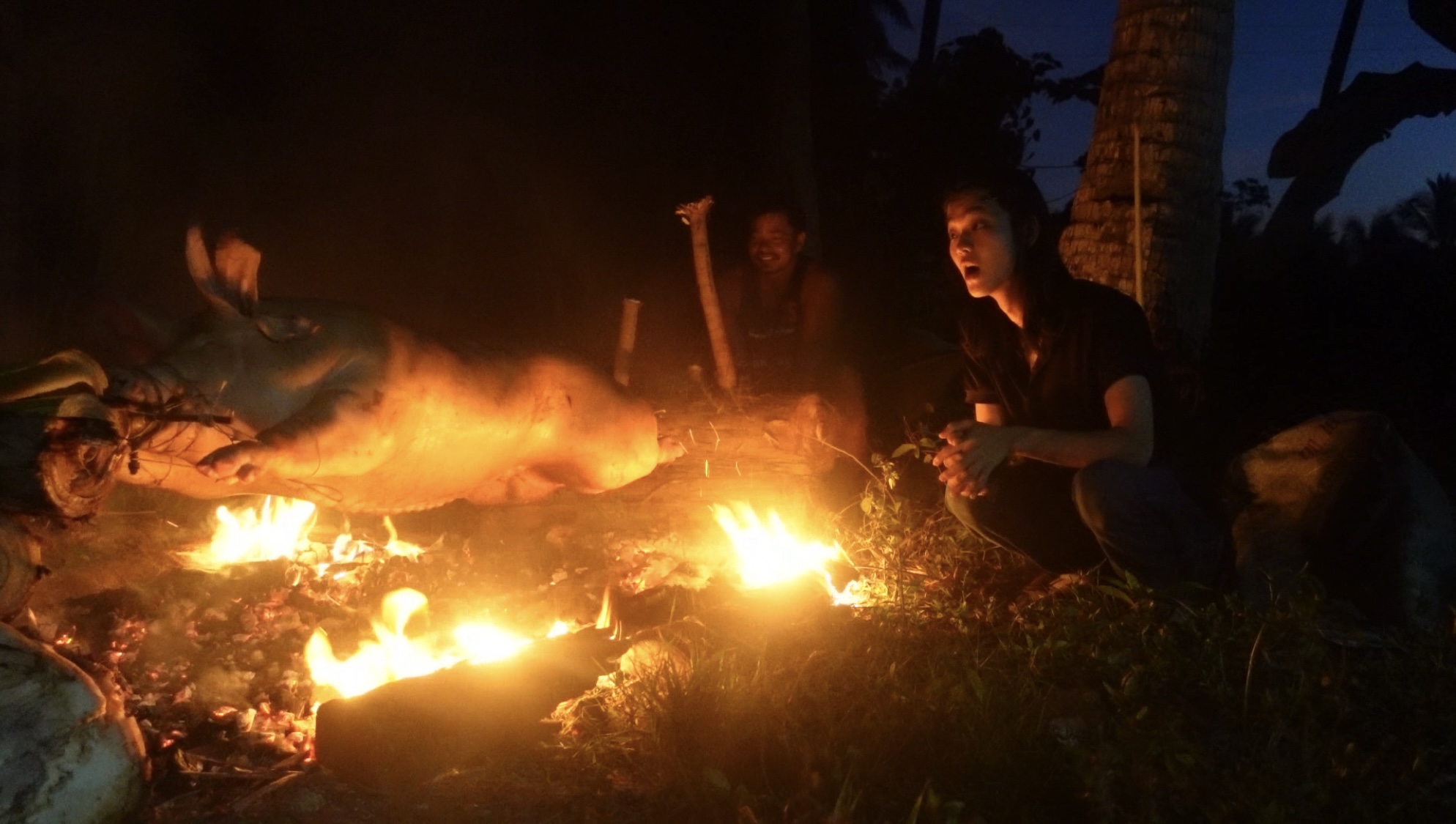
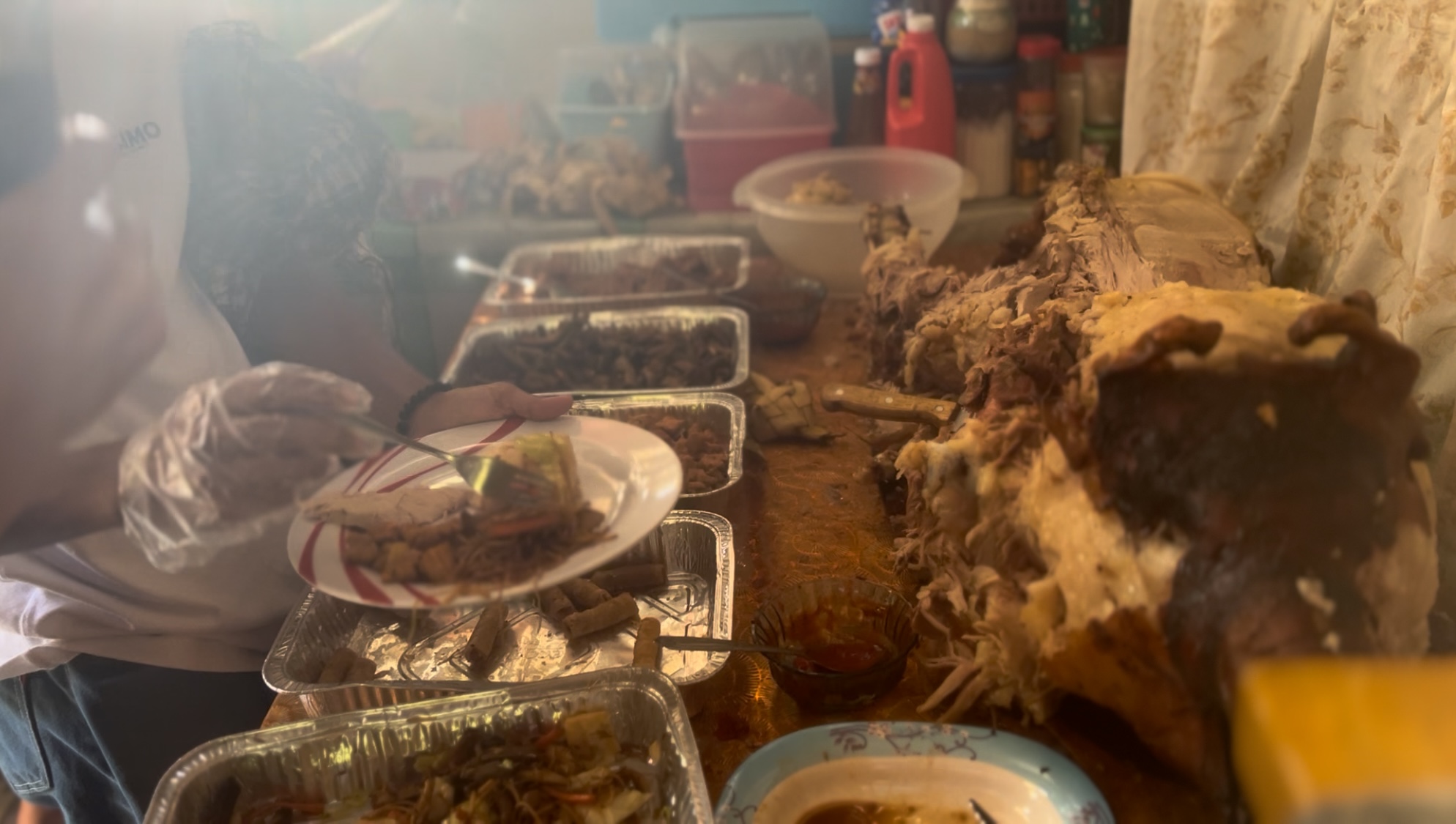
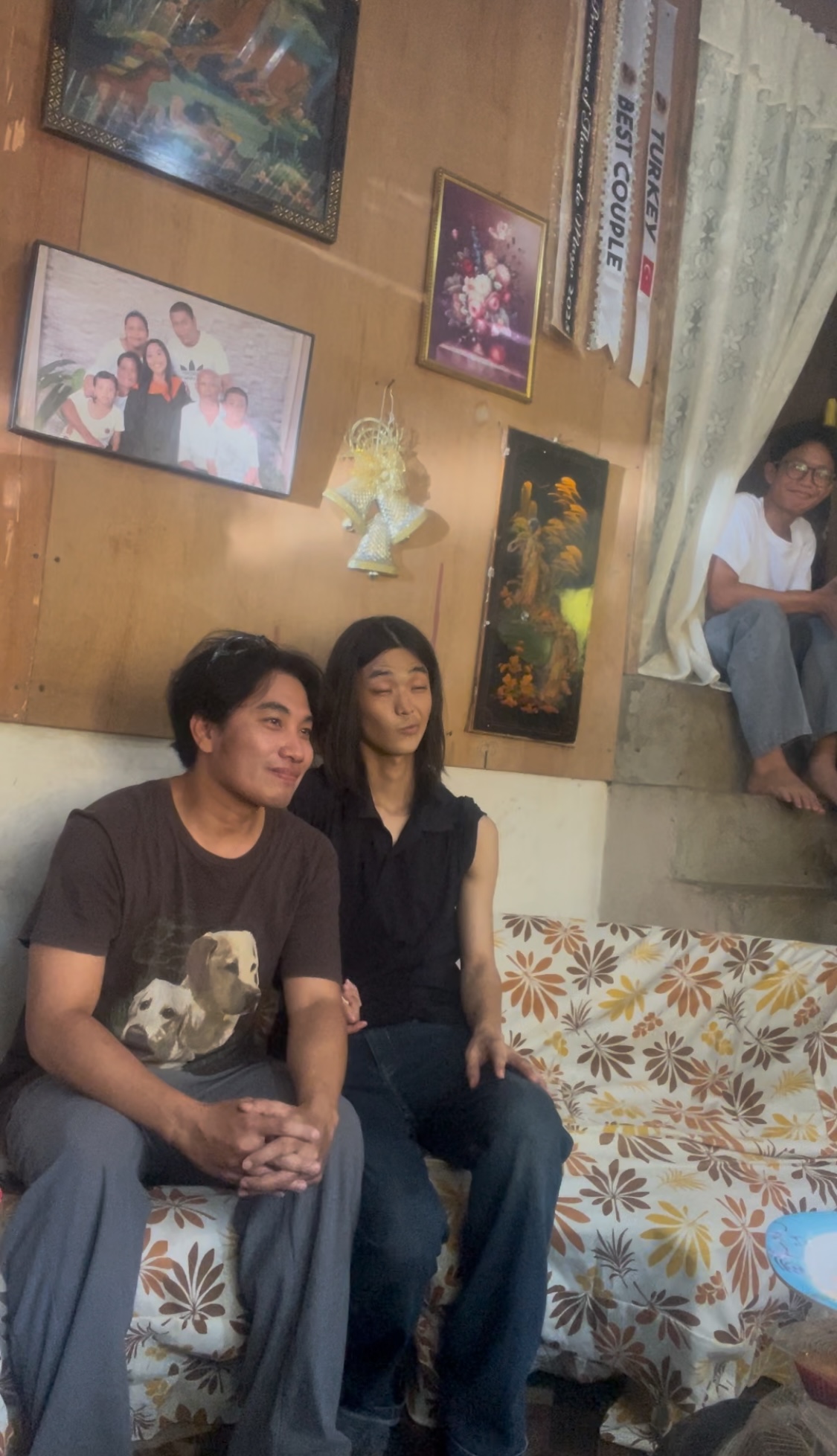
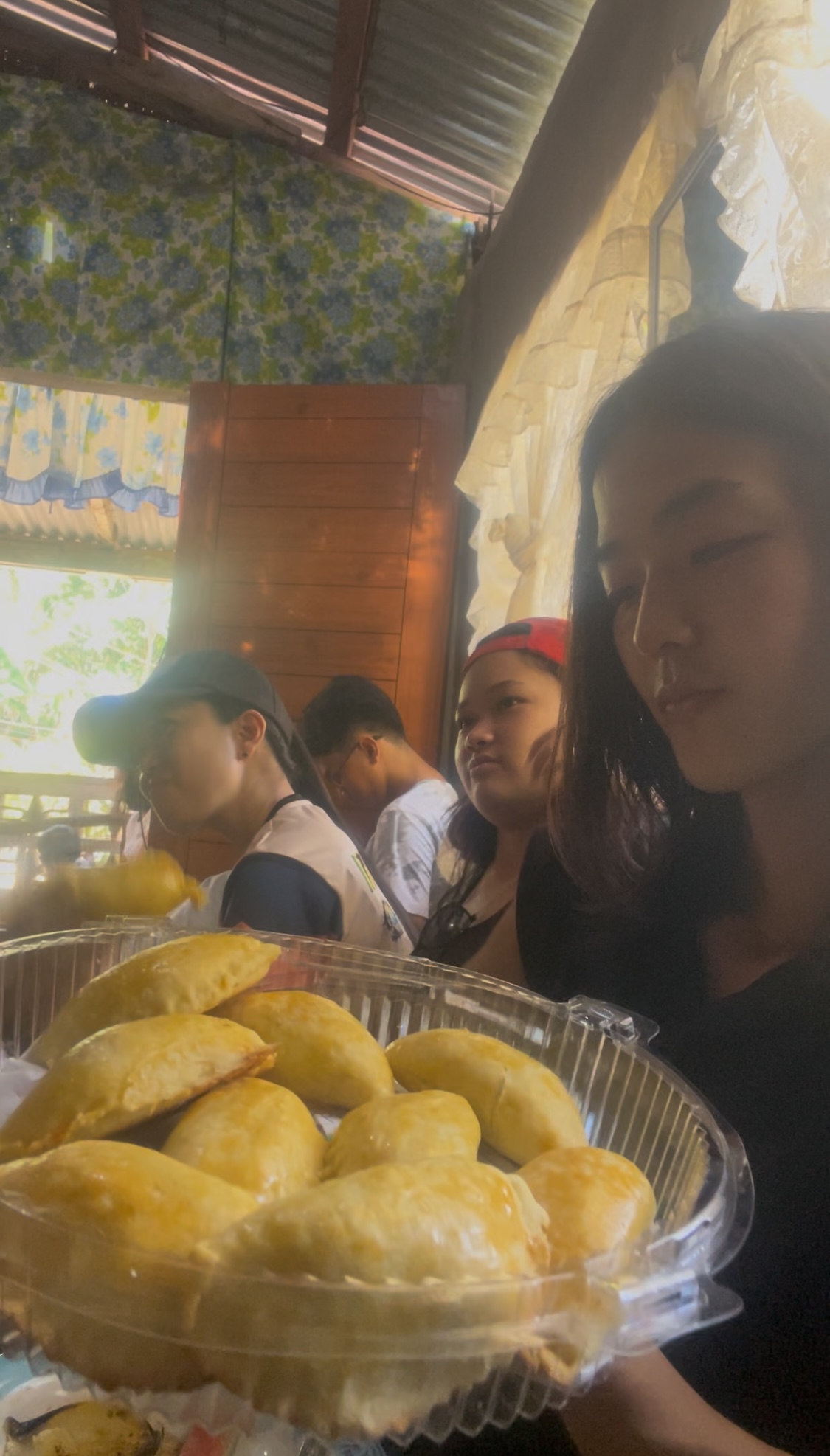
It happened at the second household we visited during the fiesta. We were inside, eating, the afternoon deep and warm and full of the specific noise that only a barangay celebration can produce — overlapping conversations, children, the distant sound of a karaoke system not giving up.
Then, from outside, came a crash. One clean, enormous sound. And then the room erupted.
Someone had gone down with a chair. Whether the chair broke under them or they simply lost the argument with gravity, I couldn't tell from where I was sitting. But the result was the same: a full house, full volume, all laughing at once. That specific kind of Filipino communal laughter that isn't mean — it's just honest, and immediate, and completely without filter.
I looked at the people around me. Nobody knew what to say next in the way that you sometimes need a beat after something unexpected. And in that half-second gap, something came out of me: "Chair broke? Sana all..."
The room went again. Maybe harder.
I'm still not entirely sure if that was appropriate. "Sana all" — roughly, "I wish that for all of us" — is a Filipino slang that works as sarcastic solidarity. Applied to a broken chair, it made no logical sense. Which is exactly why it landed.
Including the fiesta as a whole — the chaos, the generosity, the laughter. I'm genuinely glad I was there for all of it.
Language learning has a moment — and most people who study a second language will recognise it — where you stop translating and start reaching. You grab a word or a phrase not because you've calculated its correctness but because it feels right in the space that just opened up.
That's what happened with "Sana all." I had heard it enough times in Cebu to understand the emotional shape of it — the sarcastic warmth, the communal wink, the way it acknowledges a situation without taking a position on it. When the chair broke and the room went briefly quiet, I didn't think. I reached.
The laughter told me I'd gotten it right. But more than that, it told me something about how Filipino humour operates at its core: it is participatory. You are not laughing at something. You are laughing with the moment, and the room rewards anyone who steps into that energy without hesitation.
Physical comedy — a fallen chair, a crash, a stumble — is the most universal format because the body speaks before language does. "Sana all" added the second layer: cultural fluency. The combination of both in one four-second sequence is exactly the kind of thing that gets replayed in the mind later, not because it was hilarious, but because it was real.
That gap between not-quite-belonging and suddenly-belonging is where the best moments of cultural immersion live. This was one of them.
There is a threshold in any cross-cultural encounter where the dynamic quietly shifts. On one side of it, you are a visitor being accommodated. On the other side, you are simply a person in the room. Most people never find out exactly when they crossed it — they just look back and notice they did.
"Sana all" is Filipino in a way that is almost untranslatable — not because the words are complex, but because the timing, the irony, and the communal recognition it triggers are completely context-dependent. A foreigner reaching for that phrase in a live, unscripted moment and landing it is, in a small but real way, evidence of belonging.
It matters because language learning is usually framed as acquisition — vocabulary, grammar, verb tenses. What rarely gets discussed is the other kind: the cultural intuition that tells you when to speak and what shape the words should take. That can't be studied. It can only be lived, in rooms like this one, at tables like this one, during fiestas that break chairs and everyone laughs anyway.
The words weren't calculated, they were reached for — and the room's laughter told me more about how Filipino humor works than any dictionary could: you don't laugh at a moment, you laugh with it, and the room rewards whoever steps in without hesitation.
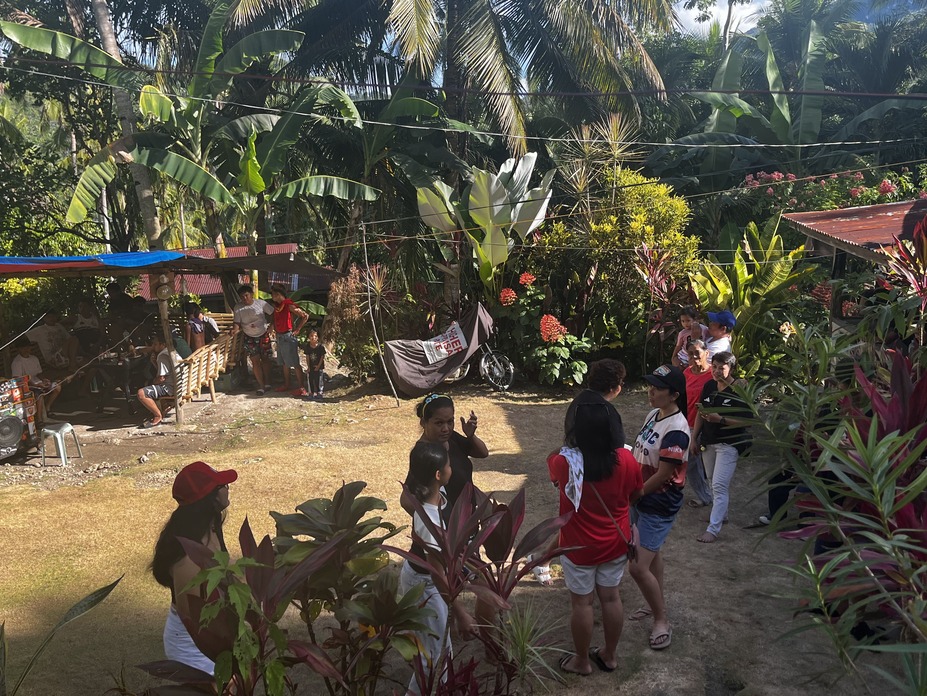
| Date | May 3, 2026 |
|---|---|
| Location | Barangay Bactas, Catmon, Cebu |
| Event Type | Barangay Fiesta (Patron Saint Festival) — 2nd household visit |
| Access Method | Invitation via local host — private household, fiesta circuit |
| Incident | Chair collapse mid-fiesta; immediate communal laughter; unplanned "Sana all" response |
| Language Used | Filipino slang ("Sana all") — deployed live, unrehearsed |
| Outcome | Full room laughter; moment of genuine cultural connection confirmed |
| Rarity | 🟨🟨🟨🟨⬜ — Unrepeatable. Chaos + correct timing + local slang, live. |
| Bayanihan Index | Very High — laughter shared immediately, no outsider dynamic present |
I still don't know if "Sana all" was actually appropriate for a broken chair, and I'm honestly not sure that's the kind of thing you can ever be fully sure about in a second language.