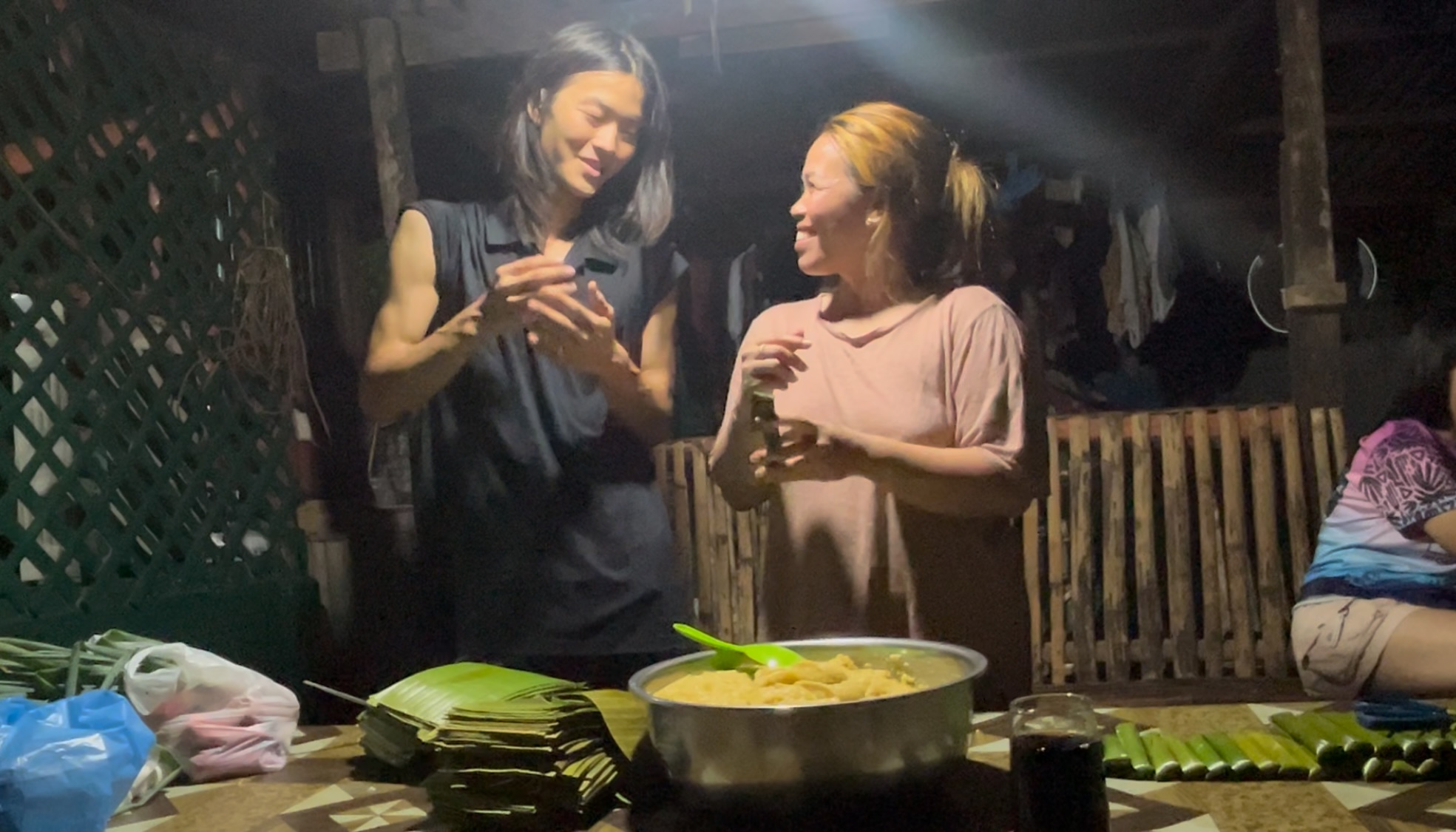
I explore the Philippines on the ground, meet the people who keep traditions going, and record the food, the work, and the everyday lives that rarely get written down.
I'm Takumi, a Japanese field researcher and storyteller based in Cebu. I go looking for rare food, the people still making it, and the local traditions that are slipping out of reach — not as a visitor describing them from outside, but as someone in the middle of it, getting it wrong and being corrected.
Each trip becomes a record. Together they add up to an archive of stories that would otherwise go unwritten.
A software engineer from Japan came to Cebu for three months — and never really left. It wasn't a plan. It was a jeepney, and strangers who became friends inside ten minutes.
He flew to Manila, auditioned, and was cut in the first round — judged on a small part of himself, not on who he actually was. It should have been the end of the story.
He travels across the Philippines documenting disappearing food traditions and the people behind them. Every lead comes from viewers. Every discovery goes into the archive.
"If they won't give me a stage, I'll build my own." Mission Briefing · File 00
I'll Be King of the Philippines
Some of Cebu's most meaningful food traditions are becoming harder to find. I go into the field to trace their origins, meet the people keeping them alive, and check on the ground what is actually still being made — and by whom.
A dish is only the entrance. What comes out is the history of a town, the work of one family, and what happens to all of it next.
Every record starts with a question I couldn't answer from a distance. Food is where most of them begin, but the trail runs into fiestas, local customs, makers, and the people who keep all of it going.
Behind every story is a trail of people, places, conversations, and discoveries. The Field Archive brings those traces together — what was found, where, from whom, and what is still missing.
Looking for a food, a place, a tradition, or a story? Ask the archive in plain words and it will point you to the records that actually cover it, with links to the quests themselves.
Ask — "what is budbud kabog?" ·
"which quests happened in Argao?"
Explore — full list, search, categories and the field map.
Some of them are still held in a memory, an old photograph, or a town where nobody has thought to ask.
Each case below says what is still unknown and the kind of clue that would move it. A half-remembered detail counts — and whoever sends it is credited on the contributors wall.
Good stories begin with listening, respect, and careful research. Every project starts on the ground, with real people and a commitment to documenting their stories responsibly.
Working languages: Japanese (native), English, and Bisaya for fieldwork in Cebu — with basic Tagalog for work beyond the Visayas. Based in Cebu, available across the Philippines.
Selected as a featured cultural figure — a profile of the work documenting Cebu's disappearing food culture.
Direct aid and media amplification after a fire in Barangay Ermita, covered by CDN.
After the 6.9M earthquake in Bogo, food and supplies were donated directly to affected residents. Shared by Unknown Facts.
Relief goods delivered directly to typhoon-affected families in Cebu.
Selected as a featured cultural figure by Cebu Daily News. A deep-dive exploration of "Takumi Senpai" as an artistic bridge between Japan and the heart of Cebuano heritage.
Invited as a guest and cultural judge for the Japanese Sky Lantern Festival at CTU Danao.
Starred in the official promotional video for Mactan-Cebu International Airport.
Selected by TikTok & Spectrum Media for the sold-out Sinulog season festival.
Profiled in the December issue of Bisaya Magazine, one of the Philippines' oldest regional publications.
First press recognition as a Japanese influencer bridging cultures via the Inquirer Network.
Formally invited by the Ginatilan Municipality to document and promote their regional heritage delicacies.
Listed organisations are those that have published, invited, or collaborated on documented work. Each item above links to the third-party source.
I work with Japanese production teams, broadcasters, researchers, and organizations that need someone already in the Philippines — to find the right people, check what is actually there, and keep a shoot moving.
Finding what's actually there — people, places, and leads worth following.
Scouting ahead, arranging the day, and keeping the shoot moving on the ground.
Introductions and interviews in English and Bisaya, with people who already know me.
Background research, fixing, shoot attendance, and bridging the Japanese and Philippine sides.